1. Hot-Dip Galvanization (HDG)
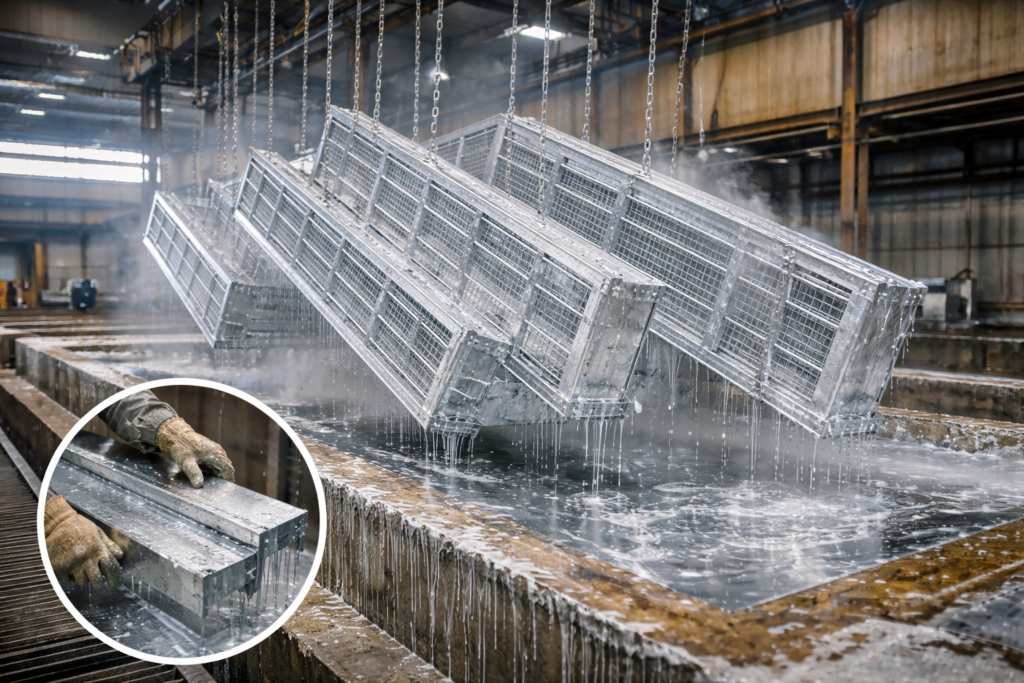
Hot-dip galvanizing is one of the most widely used corrosion-protection methods for outdoor steel structures.
Key benefits:
Provides long-term corrosion resistance (often 30–50+ years depending on the environment)
Protects both the exterior and interior surfaces of steel components
Requires minimal maintenance
Offers excellent mechanical durability
More cost-effective over the lifecycle compared to painting alone
Because external staircases and platforms are constantly exposed to weather conditions, galvanization is considered an industry standard.
2. Modular Design Systems
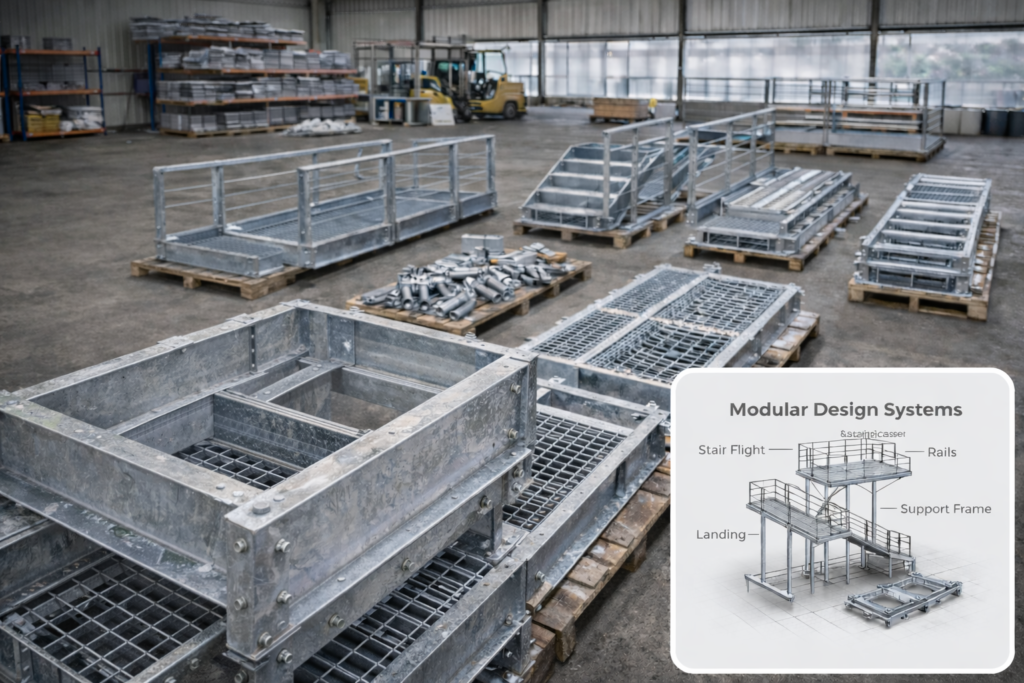
Modular construction allows structures to be prefabricated and assembled quickly on-site.
Advantages:
-
Faster installation time
-
Reduced labor costs
-
Easier transportation
-
Simplified future expansion or modification
-
Improved dimensional accuracy due to factory production
Prefabricated modules typically include stair flights, landings, railings, and support frames.
3. High-Strength Structural Steel
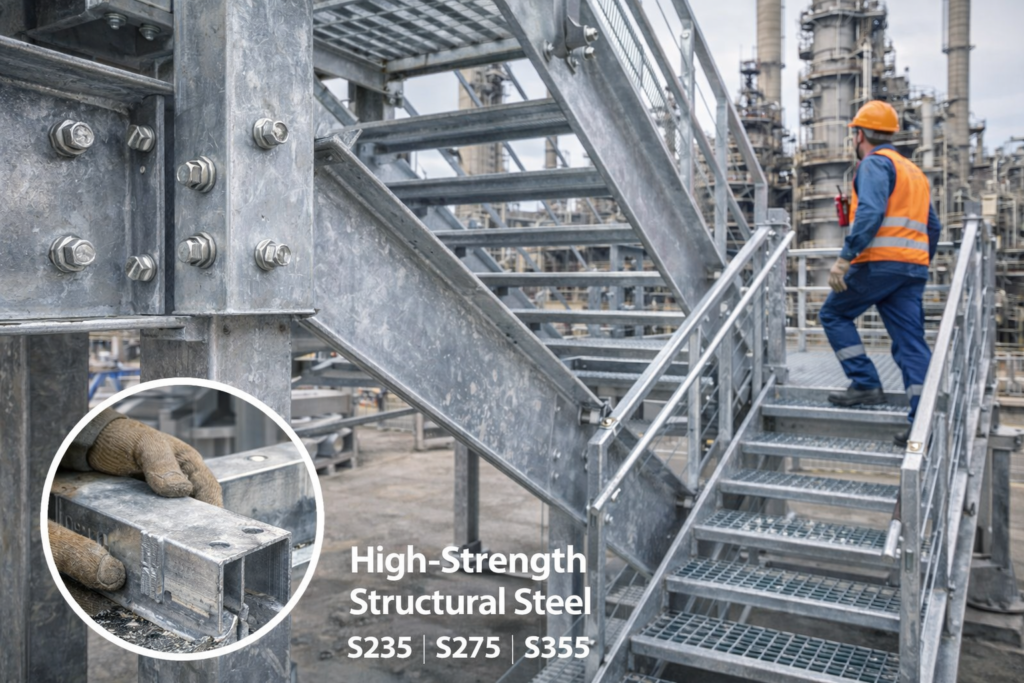
Most systems use certified structural steels such as S235, S275, or S355, selected according to load requirements.
Why it matters:
-
Ensures structural stability
-
Supports high load capacities
-
Meets international building standards
-
Performs well in demanding industrial environments
4. Anti-Slip Walking Surfaces
Safety is critical for elevated structures.
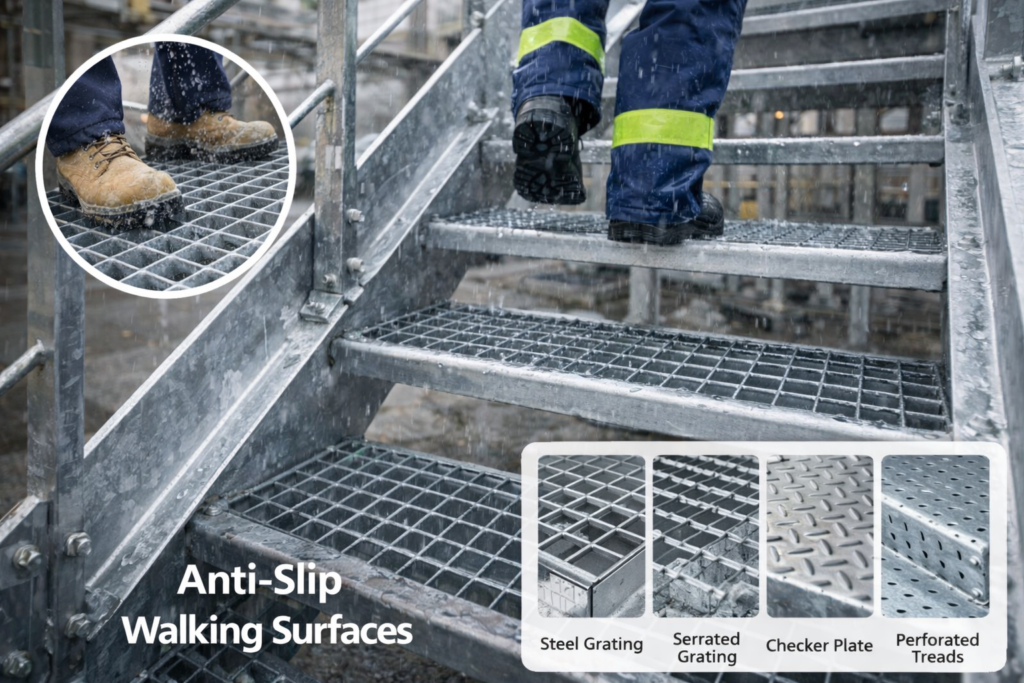
Common solutions include:
-
Steel grating platforms
-
Serrated grating for increased traction
-
Checker plates
-
Perforated metal treads
These surfaces improve drainage and significantly reduce slip risk in rain, snow, or industrial conditions.
5. Bolted Connections Instead of Welding On-Site
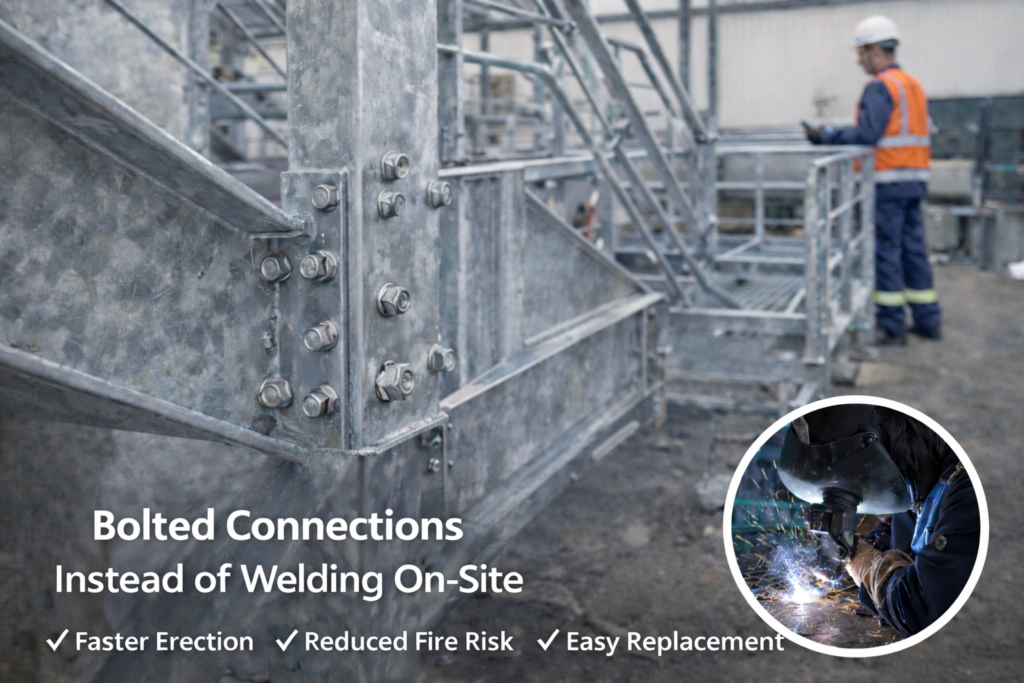
While many components are welded in the factory, bolted assembly is preferred during installation.
Benefits:
-
Faster erection
-
No need for hot work permits
-
Reduced fire risk
-
Easier replacement of damaged parts
-
Greater flexibility during alignment
High-strength bolts are typically used for structural joints.
6. Compliance with Safety Standards
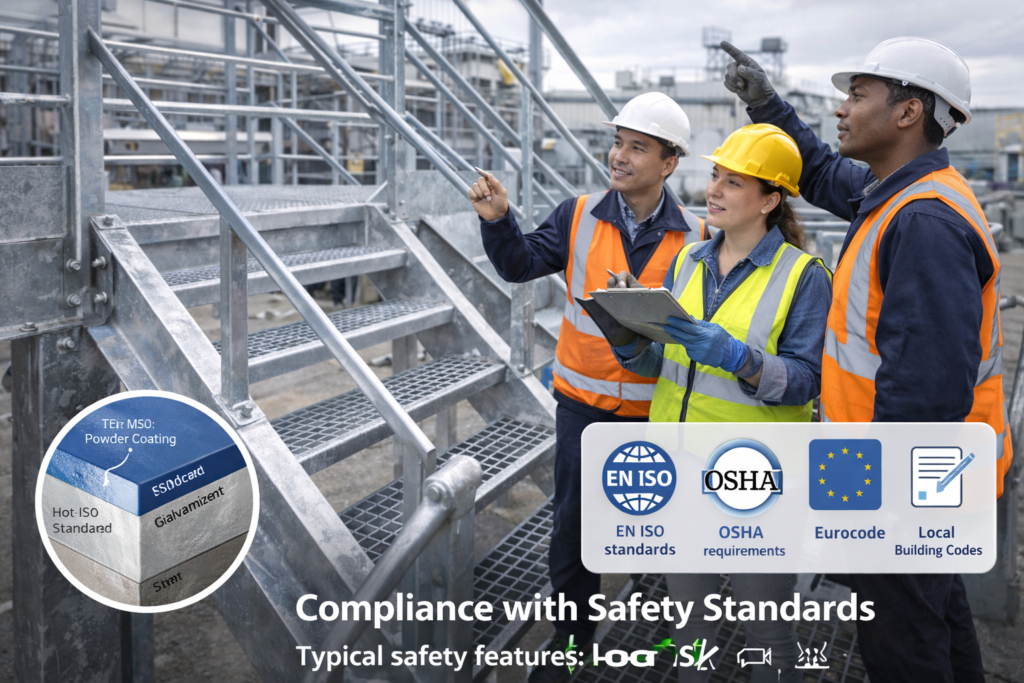
Universal staircase and platform systems are designed to comply with international regulations such as:
-
EN ISO standards
-
OSHA requirements
-
Eurocode
-
Local building codes
Typical safety features include:
-
Guardrails and midrails
-
Toe boards
-
Proper stair angles
-
Load-rated platforms
-
Adequate landing spacing
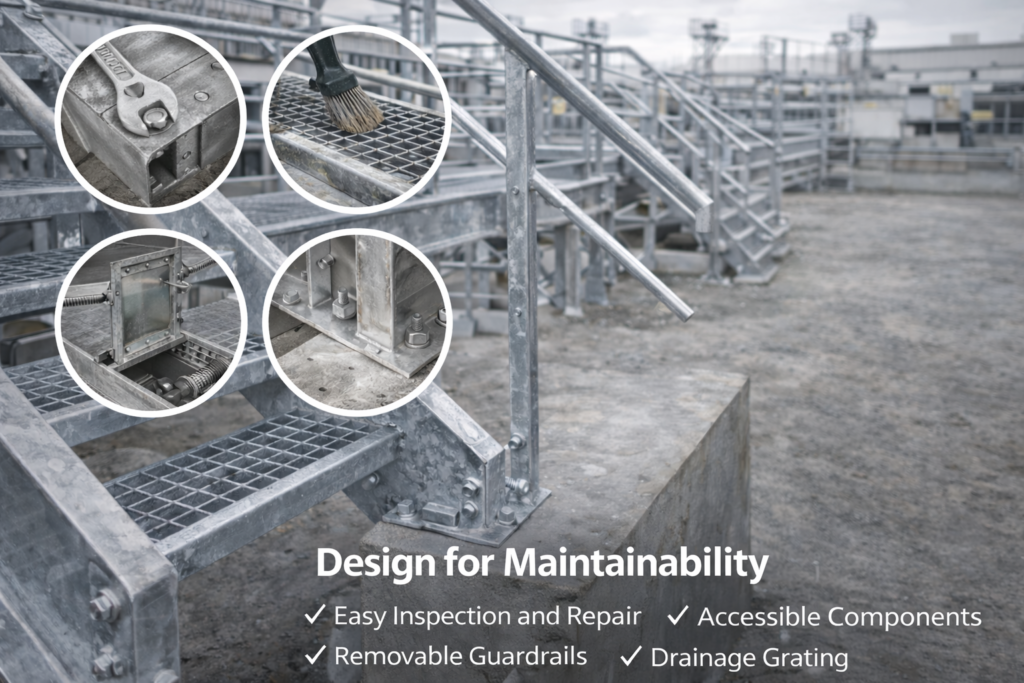
7. Design for Maintainability
Modern steel structures are increasingly designed with lifecycle costs in mind.
Examples:
-
Replaceable grating panels
-
Accessible bolt connections
-
Corrosion-resistant fasteners
-
Drainage-friendly geometry
This reduces downtime and long-term operational costs.
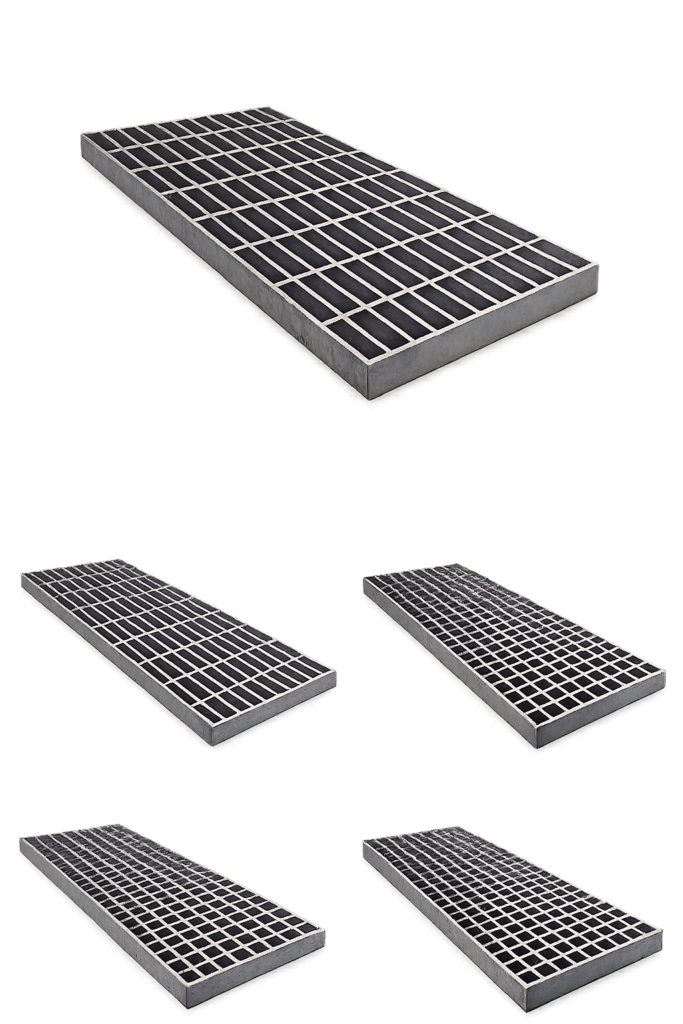
Steel gratings are a fundamental component in the construction of industrial platforms, stair treads, walkways, and access systems. They are engineered to provide a strong, durable, and slip-resistant walking surface while allowing for drainage, ventilation, and easy cleaning — all critical in demanding industrial environments.
Typical Dimensions and Structure
Steel gratings are manufactured from load-bearing bars that run in one direction and cross bars that provide lateral stability. The spacing and thickness of these elements determine the grating’s load capacity and application.
Smaller openings reduce the risk of objects falling through and improve pedestrian comfort, while larger openings enhance drainage and minimize material weight.
| Bearing Bar Pitch | Cross Bar Pitch | Typical Designation | Description | Typical Uses |
|---|---|---|---|---|
| 41 mm | 100 mm | Standard industrial mesh | The most common open-mesh spacing, balancing strength, drainage and ventilation. | Walkways, platforms, plant access areas |
| 34 mm | 100 mm | Ball-proof / safety mesh | Reduced opening size limits object fall-through and improves safety in elevated areas. | Public walkways, safety-critical zones |
| 30–31 mm | 100 mm | Close mesh | Tighter spacing improves walking comfort and prevents small items falling through. | Maintenance walkways, service platforms |
| 41 mm | 50 mm (approx.) | Square / close transverse mesh | More frequent cross bars increase rigidity and support for smaller loads. | Equipment platforms, high-traffic zones |
Materials and Protection
Industrial gratings are produced from carbon steel and protected using hot-dip galvanization, which creates a metallurgical bond that protects against corrosion for decades.
Performance Benefits
High strength-to-weight ratio
Excellent load distribution
Natural anti-slip properties (especially with serrated bars)
Fire resistance
Minimal maintenance requirements
Easy modular installation and replacement
Because of their versatility, steel gratings are widely specified by engineers for facilities such as manufacturing plants, energy installations, water treatment plants, and logistics centers — anywhere safe, durable elevated access is essential.